

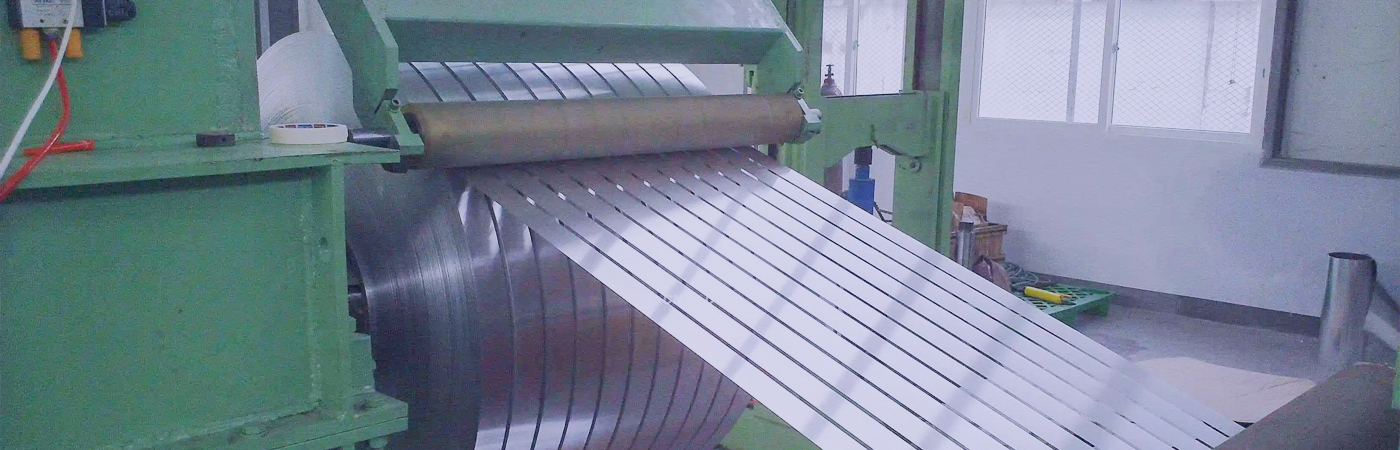
3003 Aluminum Strip for Cooking Utensils
In modern kitchens that prioritize health, efficiency, and aesthetics, the choice of cookware materials directly impacts the cooking experience and safety. The widespread use of 3003 aluminum strip in kitchens stems from its excellent formability, corrosion resistance, and moderate strength. It meets the processing needs of complex shapes while remaining suitable for the humid and oily environment of a kitchen. Its applications cover three main categories of cookware:
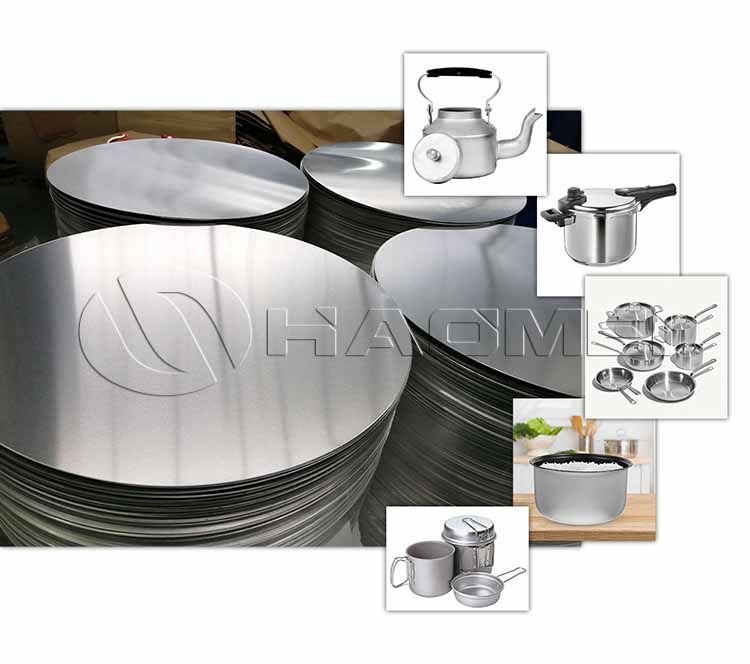
1. Cooking Utensils
As core cookware that comes into direct contact with food, the food-grade certification of 3003 aluminum strip ensures safe use. It is often used as the base material for deep-drawn cookware such as woks, frying pans, and saucepans. Especially in steel-aluminum composite non-stick pans, 3003 aluminum strip acts as the intermediate heat-conducting layer, effectively solving the problems of poor heat conduction and heavy weight in single-layer stainless steel pans, allowing for rapid and even heat transfer and preventing localized scorching.
Furthermore, 3003 aluminum strip is frequently used in the inner pots of lunch boxes and food storage containers, baking trays, and grill racks. Its lightweight nature makes it more convenient to carry and handle, while its rust resistance protects against acid and alkali corrosion from food.
2. Kitchen Accessories
3003 aluminum strip plays a vital role in the details of the kitchen. For example, it's used in the casing, filters, and ventilation ducts of range hoods; decorative panels and drawer slides of kitchen cabinets; and sealing strips around sinks and support structures for knife racks.
3. Storage and Auxiliary Items
For kitchen storage items, the lightweight and malleable nature of 3003 aluminum strip makes it an ideal choice. For instance, food storage jars and spice containers made from 3003 aluminum strip not only offer excellent sealing, extending the shelf life of food, but also feature a simple and stylish appearance through surface treatments, complementing various kitchen décor styles.
Furthermore, kitchen heat-resistant mats, metal sleeves for cookware handles, and other auxiliary items are also frequently made from 3003 aluminum strip. Its excellent processing performance can meet different functional needs, balancing practicality and aesthetics.
Multiple Surface Treatments
1. Passivation Treatment
This is the most basic and commonly used surface treatment method for 3003 aluminum strip, divided into traditional chromate passivation and environmentally friendly chromium-free passivation (such as titanium-zirconium series). Through passivation, a dense oxide film forms on the surface of the aluminum strip, effectively blocking moisture, oil, and other corrosive substances, significantly improving rust resistance. It is especially suitable for kitchenware accessories such as range hoods and sinks that are in constant contact with humid environments. The passivated surface has a natural metallic color, simple and aesthetically pleasing, and does not affect subsequent processing.
2. Anodizing
Anodizing treatment forms a 10-20μm thick oxide film on the surface of 3003 aluminum strip through electrolysis. This not only enhances surface hardness and wear resistance but also allows for various colors to be achieved through dyeing processes, such as silver, gold, and black, giving kitchenware a more stylish look.
This treatment method is often used in cabinet decorative panels and the outer shells of high-end cookware, enhancing both appearance and extending the lifespan of the kitchenware. However, it's important to note that while the anodizing effect of 3003 aluminum strip isn't as good as 6-series alloys, it's still sufficient for most kitchen applications.
3. Coating Treatment
Coating treatments mainly include fluorocarbon coating and powder coating, suitable for kitchenware requiring high aesthetics and protection. Fluorocarbon coating uses PVDF coating, offering excellent weather resistance and corrosion resistance, with a lifespan of 15-20 years, suitable for outdoor use or kitchenware surfaces exposed to cooking fumes for extended periods.
3003 Aluminum Strip Specifications
1. Core Dimensions
Regarding thickness, the common thickness range for 3003 aluminum strip on the market is 0.1-3.0mm. Thicknesses around 0.5mm (e.g., 0.5*1000*C) are commonly used for kitchenware shells and storage containers; thicknesses of 1.0-3.0mm are more suitable for cookware substrates, cabinet panels, and other applications requiring a certain level of strength. Width can be customized, with a standard range of 10mm-2200mm, adaptable to different sized kitchenware.
In addition, the inner diameter of the aluminum strip can be customized, with common inner diameters including 75mm, 150mm, 200mm, and 300mm. The outer diameter and weight per roll can be adjusted according to customer needs for convenient subsequent processing.
2. Material State and Performance
3003 aluminum strip is mainly supplied in O temper (annealed state) and H temper (such as H14 and H24 semi-hard state). The O temper is extremely soft with excellent plasticity, suitable for deep drawing and can be made into complex-shaped cookware, storage containers, etc. The 3003 h14 combines certain strength with good formability, is easy to bend and stamp, and is suitable for making range hood shells, cabinet slides, and other accessories. Its mechanical properties are excellent, with a tensile strength of 120-160MPa and a conditional yield strength ≥85MPa, which is about 20%-30% higher than pure aluminum, meeting the daily needs of kitchenware.
Original source: https://www.aluminumstrip24.com/news/3003-aluminum-strip-for-cooking-utensils.html
Tags: aluminum strips for sale,
Previous: What Are Uses of Color Coated Aluminum Strips
Next: Aluminum Strip for Insulation