

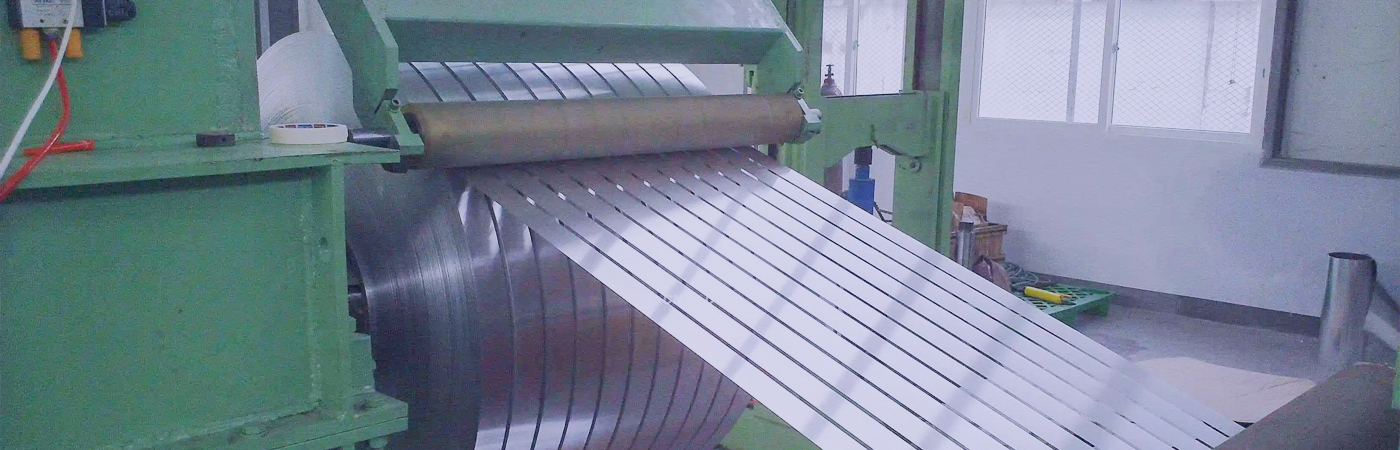
Aluminium Nose Bridge Strips
For mask and respirator producers, the main concern with aluminium nose bridge strips is not only price. It is whether the insert bends easily, holds the face seal, runs smoothly on automated equipment, and stays safe at the edges.
A weak nose bridge causes air leakage, fogged eyewear, wearer discomfort, and higher rejection rates. A strip that is too hard can spring back. A strip that is too soft, too narrow, or poorly slit may wrinkle, twist, or fail during ultrasonic welding and folding.
This article focuses on one practical product feature: consistent formability with low springback. That feature depends on alloy selection, temper, thickness control, edge quality, and surface cleanliness.
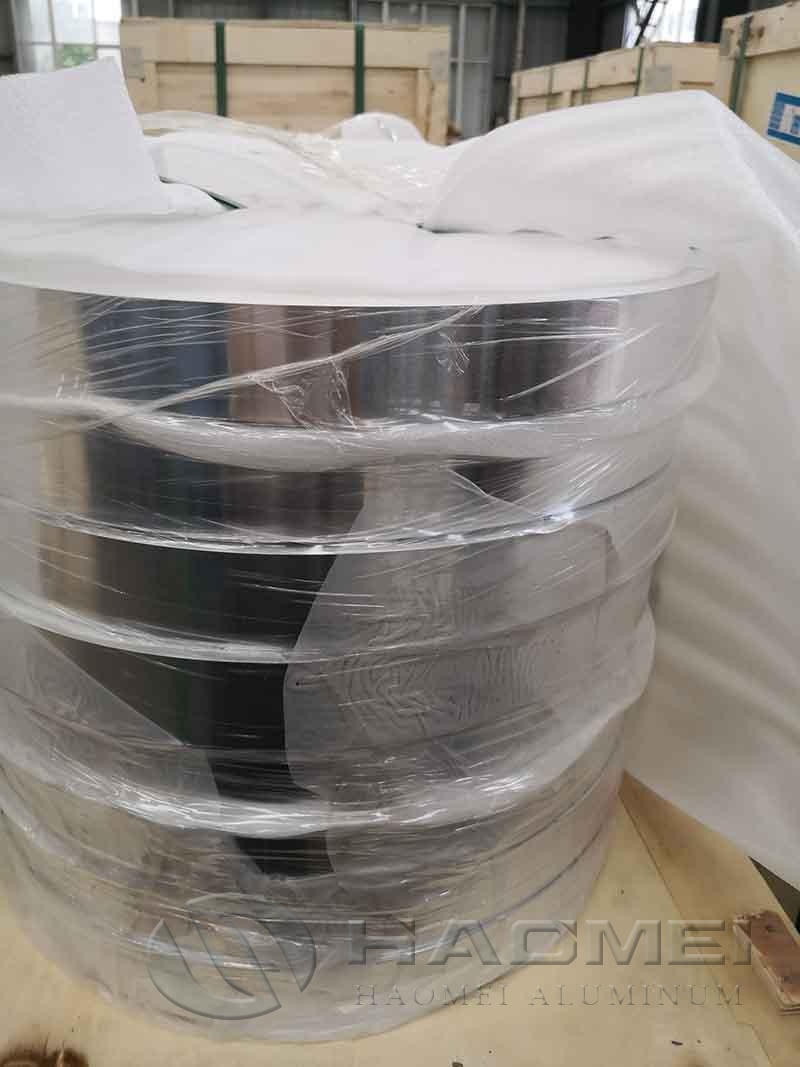
1. Material selection for stable bending
Most aluminium nose pieces are made from commercially pure aluminium because it offers high ductility, low density, corrosion resistance, and easy forming. Aluminium density is about 2.70 g/cm3, roughly one-third of steel, which helps reduce mask weight while keeping enough shape retention.
Common choices include 1050, 1060, 1070, and 1100 aluminium. These grades are often selected when the application needs easy bending rather than structural strength. For high-speed mask lines, many sourcing teams compare soft tempers because they reduce springback after the wearer presses the bridge against the nose.
For plants standardizing around pure aluminium, 1060 Aluminum Strip for Sale is often evaluated because 1060 aluminium contains at least 99.6% aluminium under common international grade definitions. For broader grade comparison, 1000 Series Aluminum Strip covers commercially pure aluminium options used in bending and packaging applications.
| Alloy option | Typical reason for use | Formability | Notes for mask inserts |
|---|---|---|---|
| 1050 | High purity and easy forming | Excellent | Suitable for soft, comfortable bridge inserts |
| 1060 | Higher aluminium content than 1050 | Excellent | Good balance for stable bending and corrosion resistance |
| 1070 | Very high purity | Excellent | Used when high ductility is prioritized |
| 1100 | Commercially pure aluminium with small additions | Very good | Slightly stronger than some pure aluminium options |
Temper is just as important as alloy. O temper, also called annealed temper, is normally preferred when the strip must bend repeatedly by hand without cracking. Harder tempers may feed well, but they can resist shaping and rebound after pressing.
When requesting quotations, specify the standard used for chemical composition and mechanical properties. Rolled aluminium products are commonly referenced to standards such as ASTM B209, EN 485, or EN 573, depending on the market and contract terms. The finished mask or respirator must still be tested under the applicable finished-product standard.
2. Tolerance checklist for fewer line stoppages
A nose bridge insert looks simple, but automated mask machines are sensitive to small dimensional changes. Width variation can affect feeding. Burrs can cut nonwoven layers. Poor coil winding can cause telescoping or jams.
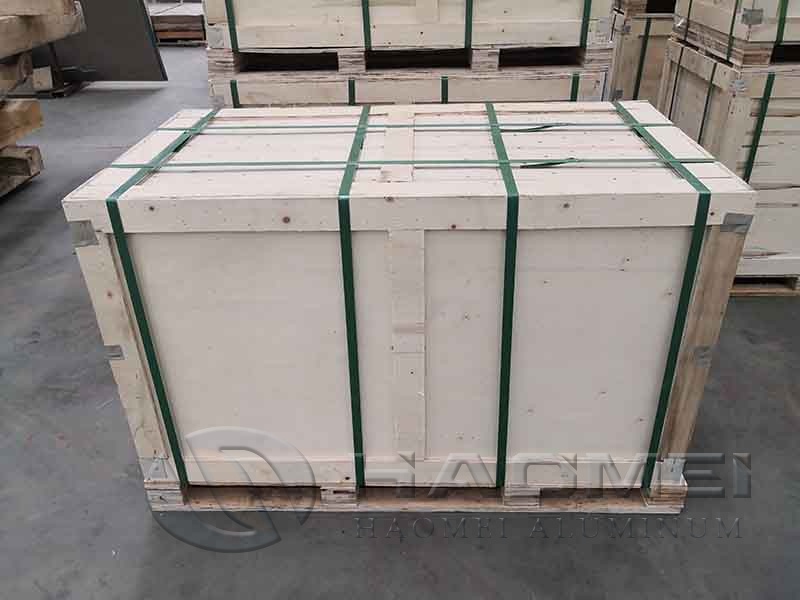
Use this checklist before approving production material:
| Check item | Practical target to confirm | Why it matters |
|---|---|---|
| Alloy and temper | 1050, 1060, 1070, or 1100 in soft temper, as specified | Controls bendability and springback |
| Width tolerance | Confirm against machine feeding slot | Prevents skewing and insertion failure |
| Thickness tolerance | Match design requirement and mask grade | Controls stiffness and wearer comfort |
| Edge condition | Rounded, deburred, or smooth-slit edge as required | Reduces fabric damage and skin irritation risk |
| Surface cleanliness | Oil, stain, and particle control | Supports welding, bonding, and clean assembly |
| Coil winding | Even winding, proper ID, stable packaging | Prevents downtime on continuous lines |
| Traceability | Heat number, batch number, inspection record | Supports audits and complaint handling |
Typical commercial dimensions vary by mask design. Disposable masks may use narrow aluminium inserts around 3 mm to 5 mm wide, while respirator-style products may require wider or stronger inserts. Thickness is often selected through fit testing and machine trials rather than appearance alone.
Do not approve material only from a sample that was hand-cut. Ask for slit production samples from the same equipment intended for the order. Slitting quality can change burr height, camber, and coil flatness.
A practical trial should include these steps:
- Run the strip through the actual nose bridge insertion system at normal speed.
- Check feeding stability for at least one continuous coil section.
- Bend finished masks on a fixture or by trained operators.
- Inspect whether the bridge holds shape after 5 to 10 manual press cycles.
- Review fabric damage near both ends of the insert.
- Record rejection causes separately: feeding, burrs, springback, stains, or adhesion failure.
If the strip is laminated with adhesive, verify adhesive width, peel strength, liner release, and storage stability. Adhesive-coated aluminium may solve positioning problems, but it also adds risks related to blocking, aging, and temperature sensitivity.
3. Compliance, pricing and sourcing questions
Aluminium nose bridge strips are components. They do not replace finished-product testing. Surgical masks and medical face masks are commonly assessed under standards such as EN 14683:2019+AC:2019 in Europe and ASTM F2100 in the United States. Respirators have different requirements; in the United States, NIOSH approvals are handled under 42 CFR Part 84.
For Europe, product classification matters. A medical face mask may fall under Regulation (EU) 2017/745 on medical devices, while respirators for personal protection may fall under Regulation (EU) 2016/425 on personal protective equipment. The metal insert supports fit, but the complete product is what must meet performance requirements.
Material documentation can still reduce audit risk. Ask suppliers for mill test certificates, chemical composition, temper confirmation, RoHS or REACH statements when contractually required, and packaging records. REACH SVHC declarations are frequently requested by European customers. RoHS is mainly tied to electrical and electronic equipment, so use it only when the project specification requires that statement.
Pricing should be calculated transparently. Avoid comparing only unit price per roll.
| Cost factor | What to verify | Pricing impact |
|---|---|---|
| Aluminium base price | LME aluminium price changes daily | Affects raw material cost |
| Alloy and temper | Higher purity or special annealing | May raise conversion cost |
| Slitting tolerance | Narrow width and low burr requirement | Increases processing cost |
| Surface treatment | Bare, coated, or adhesive-backed | Changes material and storage cost |
| Packaging | Coil ID, roll weight, moisture protection | Affects freight and line efficiency |
| Inspection level | Dimensional reports, traceability, sampling | Adds quality control cost |
A useful price formula is: aluminium base price + conversion fee + slitting fee + coating or adhesive cost + packaging + freight + inspection cost. This structure makes quotations easier to compare across suppliers and reduces disputes when aluminium market prices move.
Before placing a production order, ask these direct questions:
- Which alloy, temper, and standard are stated on the certificate?
- What are the guaranteed width and thickness tolerances?
- What burr height limit is controlled after slitting?
- Is the edge round, smooth-slit, or untreated?
- What is the inner diameter, outer diameter, and roll weight?
- Can the supplier provide trial coils from mass-production slitting equipment?
- How are stains, oxidation, oil marks, and telescoping prevented during export packing?
- What complaint evidence is required for replacement or credit?
For high-volume mask and respirator production, choose the nose bridge material after a line trial, not from catalog data alone. Approve the material only when formability, edge safety, machine feeding, traceability, and compliance documents match the finished-product specification.
Original source: https://www.aluminumstrip24.com/news/aluminium-nose-bridge-strips.html
Tags: Aluminium Nose Bridge Strips, aluminum nose wire, mask nose strip, 1060 aluminum strip, soft temper aluminum strip,
Previous: How Aluminum Ingot Price Affects Fin Stock Cost
Next: Aluminium Strip Roll