

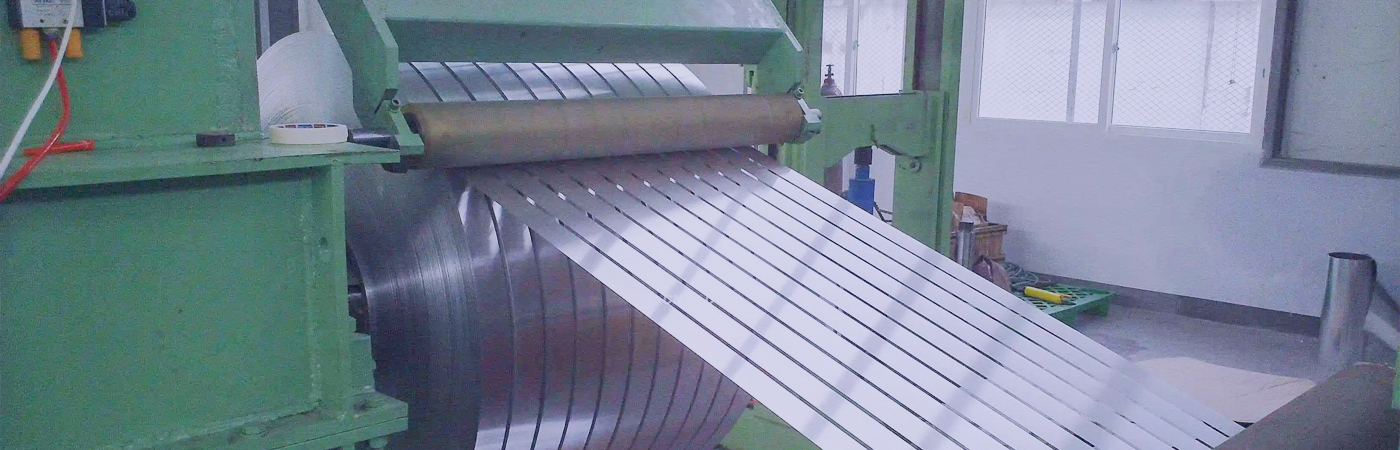
Aluminium Strip Manufacturers
Procurement teams sourcing aluminum strip often compare dozens of suppliers that appear similar on paper. The real difference is usually not headline capacity. It is process control, tolerance consistency, and how reliably a mill can deliver the exact alloy, temper, edge condition, and surface finish your application requires.
This article focuses on one top concern: thickness and width consistency. For stamping, transformer winding, ceiling systems, heat transfer parts, and general fabrication, unstable tolerances create scrap, downtime, and claims faster than almost any other issue.
What separates strong manufacturers from traders
Not every company marketing strip products is a direct producer. Some are mills, some are converters, and some are trading firms. All three can be useful, but they carry different quality and delivery risks.
| Supplier type | Typical strength | Main risk | Best fit |
|---|---|---|---|
| Integrated mill | Better control of casting, rolling, annealing, slitting | Higher MOQ on some sizes | Long-term industrial demand |
| Rolling and slitting processor | Flexible width and smaller runs | Depends on upstream coil quality | Custom width orders |
| Trading company | Fast quotation across multiple sources | Variable traceability | Multi-spec sourcing |
When reviewing aluminium strip manufacturers, ask for the production route first: cast coil or hot-rolled feedstock, cold rolling capability, annealing line, slitting line, and inspection equipment. That tells you more than a polished brochure.
The practical checklist before requesting a quote
Use this checklist to screen suppliers quickly.
1. Verify alloy and temper capability
Different applications need different series and tempers. Common commercial demand includes 1050, 1060, 1100, 3003, 3004, 5052, and 6061. If your project needs corrosion resistance for architectural trim, cookware, HVAC, or marine-adjacent use, confirm whether the producer regularly runs those grades or only lists them.
For low-strength, high-conductivity applications, review the manufacturer's 1000 Series Aluminum Strip offering and ask for conductivity, elongation, and edge quality data, not just nominal chemistry.
2. Ask for standards compliance
Common references include ASTM B209 for aluminum and aluminum-alloy sheet and plate, EN 485 for wrought aluminum products, and ISO 9001 for quality management systems. If material will enter regulated sectors, request RoHS or REACH-related declarations where applicable.
Do not assume a mill certificate alone proves suitability for your process. Check whether the certificate includes heat number, alloy, temper, actual dimensions, and test results.
3. Confirm tolerance control
This is the first area to audit in detail. Ask these questions:
What is the achievable thickness tolerance by gauge range?
What is the slit width tolerance?
Can the supplier guarantee burr height and camber limits?
Is edge condition available as slit edge or deburred edge?
How is flatness checked after slitting and recoiling?
For many industrial uses, dimensional consistency matters more than whether the quote is slightly lower.
4. Review minimum and maximum dimensions
Typical strip supply ranges vary by mill, but many producers can process thicknesses roughly from 0.2 mm upward, with custom widths slit from master coil. Wider capability and thinner gauges usually indicate stronger equipment and process control.
5. Check packaging and logistics method
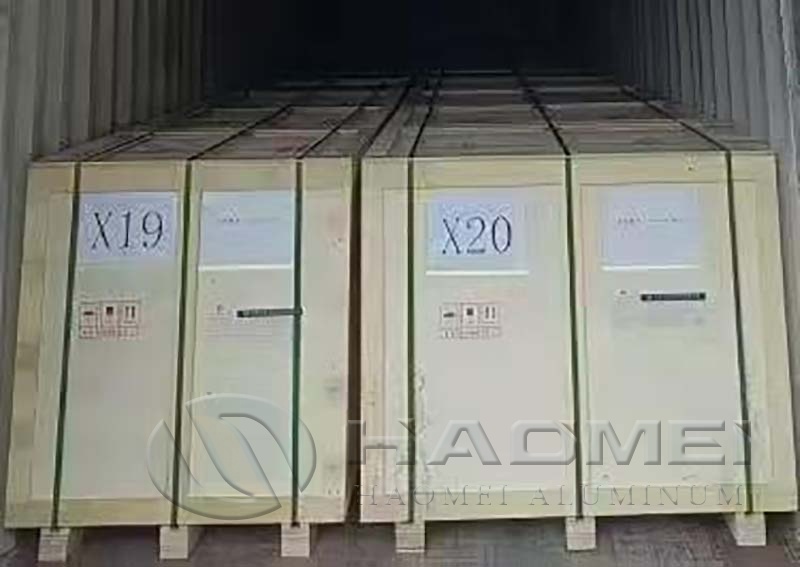
Damage often happens after production. Confirm eye-to-wall or eye-to-sky packaging, moisture barrier use, pallet strength, and export packing details. If you import by sea, moisture protection is essential.
Tolerance consistency: the feature worth prioritizing
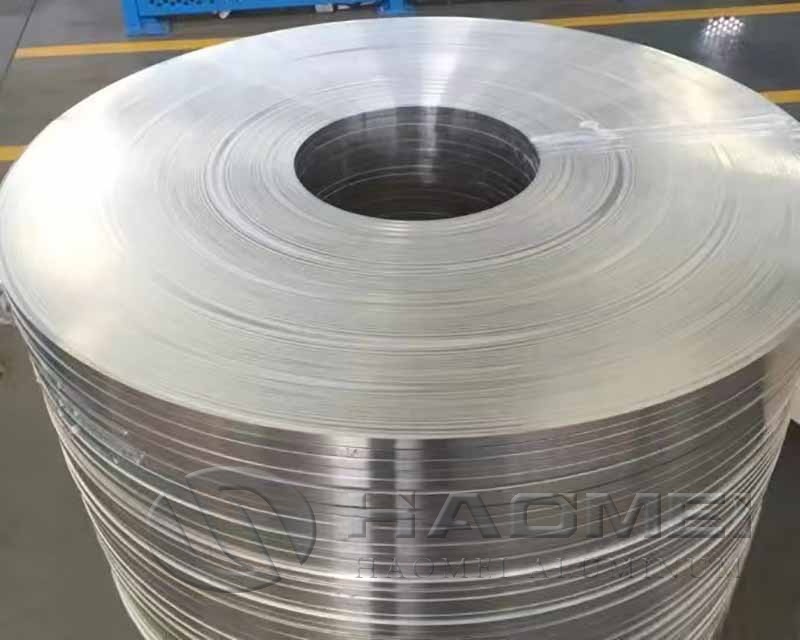
Among all product features, tolerance stability is the one that most directly affects conversion cost. Even small variation in thickness can change forming force, winding performance, coating behavior, and finished-part fit.
| Quality item | Why it matters | What to request from supplier |
|---|---|---|
| Thickness tolerance | Controls fit, weight, conductivity, forming behavior | Actual tolerance table by gauge |
| Width tolerance | Affects stamping yield and assembly fit | Slitting tolerance statement |
| Burr height | Impacts safety and downstream processing | Edge inspection report |
| Coil telescoping | Causes handling issues and line stoppage | Packing photos and coil winding method |
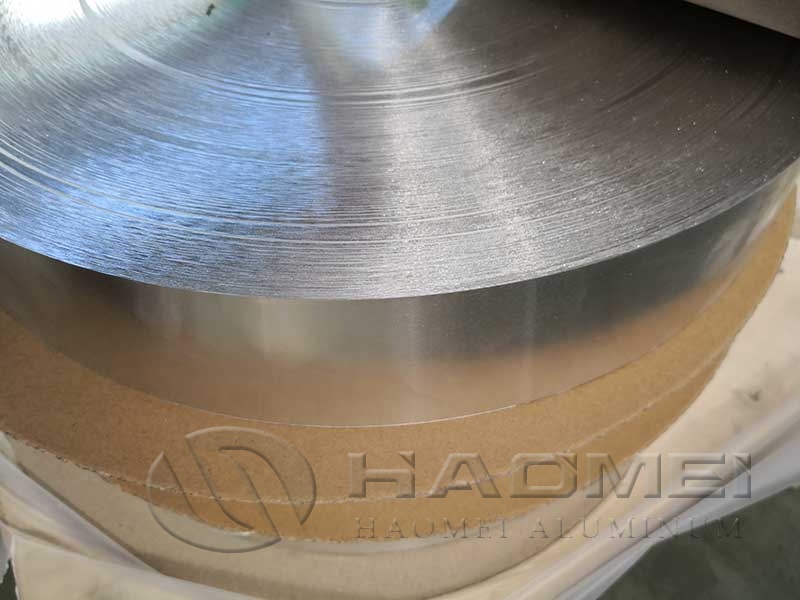
| Surface finish | Critical for coating, anodizing, decorative use | Surface standard and sample photos |
For decorative or ceiling applications, ask for sample strips from the same production route that will be used for the order, not generic showroom pieces.
Price drivers: what changes the offer most
Strip pricing is usually influenced by four factors: base aluminum market level, alloying content, processing complexity, and order specification.
| Price factor | Effect on cost |
|---|---|
| LME or regional aluminum benchmark | Moves with global metal market |
| Alloy series | Higher alloying or specialty grades can cost more |
| Temper and annealing | Additional processing increases conversion cost |
| Tight tolerance and narrow slitting | Raises processing time and scrap rate |
| Surface treatment or coating | Adds material and line cost |
| Packaging/export requirements | Increases total delivered cost |
Because metal pricing changes frequently, a reliable quotation should separate metal basis and fabrication premium where possible. This makes supplier comparisons cleaner and reduces confusion when the market moves.
Questions that reveal a supplier's real capability
Use these in supplier meetings or email RFQs:
What measuring instruments are used for thickness, width, and burr inspection?
Can you provide recent mill test certificates for the same alloy and temper?
What is the typical lead time for repeat orders versus first orders?
What is the claim rate over the last 12 months?
Do you process in-house or subcontract slitting?
Can you supply application-specific grades such as 5052 Aluminum Strip for better corrosion resistance and moderate strength?
Direct, technical answers are a good sign. Vague answers usually indicate limited process ownership.
A simple comparison framework
When comparing multiple aluminum strip suppliers, score them on a 100-point matrix.
| Criteria | Weight |
|---|---|
| Tolerance capability | 30 |
| Standards and traceability | 20 |
| Alloy and temper range | 15 |
| Lead time reliability | 15 |
| Packaging and logistics | 10 |
| Price transparency | 10 |
This approach prevents overemphasis on unit price while ignoring rejection risk.
Current market topics worth watching
Two trends matter in 2026 sourcing discussions. First, customers are asking more often for compliance documentation linked to environmental and chemical restrictions, especially for export projects. Second, lead time volatility remains important where rolling mills are balancing energy cost, maintenance cycles, and regional demand swings. That makes supplier communication and forecast accuracy more valuable than chasing the lowest initial quote.
For teams sourcing strip for electrical, architectural, or fabrication use, the most dependable manufacturers are those that can show repeatable tolerance control, clear standards compliance, and documented production capability. In practice, that combination reduces total cost far more effectively than a low headline price alone.
Original source: https://www.aluminumstrip24.com/news/aluminium-strip-manufacturers.html
Tags: aluminium strip manufacturers, aluminum strip supplier,
Previous: Aluminium Strip 3mm
Next: Aluminium Strip Price