

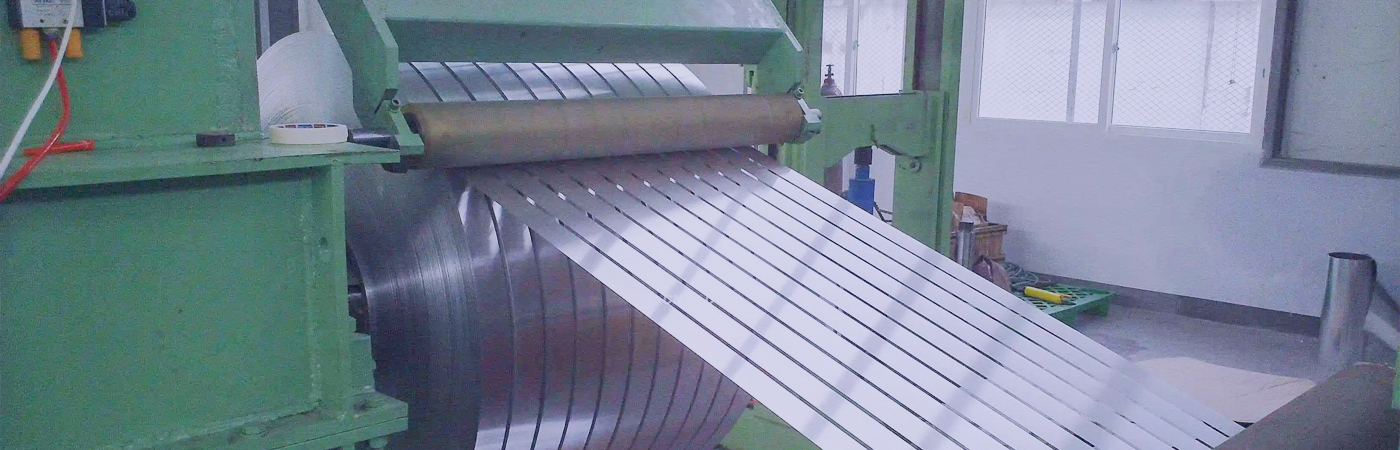
Black Aluminium Strips
Black aluminium strips are usually supplied as slit material with a black surface created by anodizing, paint coating, or laminated film. The top concern for most industrial users is not color alone, but whether the black finish will stay consistent during forming, outdoor exposure, and batch-to-batch delivery.
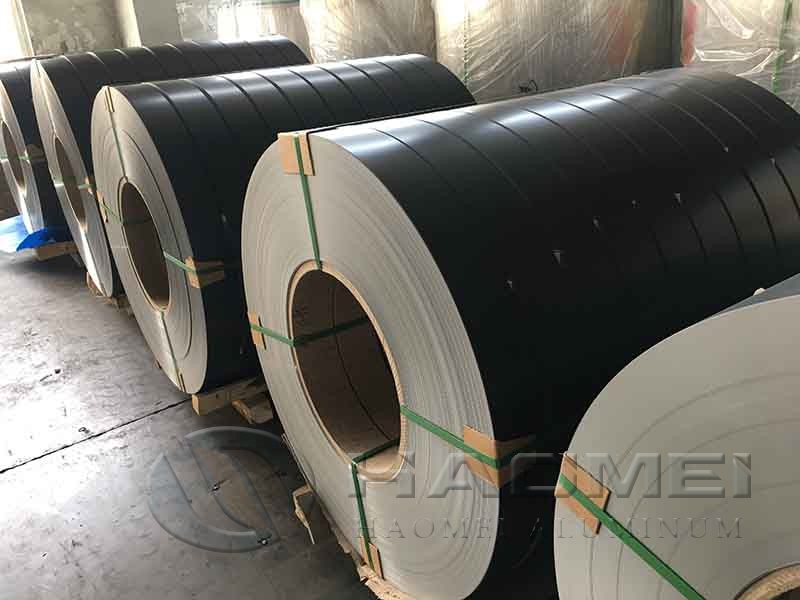
This article focuses on practical selection: which substrate alloy to choose, which finish specification to request, which tests matter, and how to compare quotations without missing hidden quality risks.
What black aluminium strips are and how they are made
In industry, black-finished strip normally falls into three categories:
| Type | How black surface is made | Typical substrate | Main advantage | Main limitation |
|---|---|---|---|---|
| Black anodized strip | Electrochemical oxide layer, then dyed black and sealed | Often 5005, 5052, 6063 | Metallic appearance, good abrasion resistance | Color variation can occur between lots; edge damage is visible |
| Black painted strip | Polyester, SMP, PVDF, or similar coil coating | Often 1050, 3003, 3005, 3105, 5005 | Wide color control, lower cost, easier large-volume supply | Paint hardness and bendability depend on coating system |
| Black laminated strip | Decorative or protective film laminated on surface | Varies | Specific texture or insulation function | Film aging and adhesion must be verified |
For architectural trim and visible parts, black anodized material is common. For rainwater goods, ceiling systems, cable shielding covers, nameplate backing, and decorative profiles, painted strip is often more economical.
If the application starts from standard mill-finish slit stock and needs later finishing, compare substrate options under Alloys. For corrosion-sensitive fabrication, 5052 Aluminum Strip is frequently selected because it balances formability and corrosion resistance better than many non-magnesium grades.
Which standards and tests should be on the purchase specification
A frequent sourcing problem is that orders mention only width, thickness, and black color. That is incomplete. For industrial consistency, the inquiry should define the substrate standard and the finish standard separately.
1. Base metal standards
Common reference standards include:
ASTM B209 / B209M for aluminum and aluminum-alloy sheet and plate, often used as a general supply reference for flat rolled product.
EN 485 series for wrought aluminum and aluminum alloy sheet, strip and plate in Europe.
EN 573 for chemical composition designation.
ASTM B221 may also appear where downstream extrusion comparison is involved, but for rolled strip the core references are usually B209 or EN 485.
2. Coating or anodizing standards
Use a finish-specific standard whenever possible:
AAMA 2603, 2604, 2605 for architectural organic coatings, depending on weatherability level.
Qualicoat specifications for coated architectural aluminum.
Qualanod guidance for anodized aluminum, including film thickness and quality control.
ISO 7599 for anodizing of aluminum and its alloys.
ISO 2360 for non-conductive coating thickness by eddy-current measurement.
ISO 2409 for cross-cut adhesion testing on paints.
ASTM D2794 or equivalent for impact resistance of organic coatings.
ASTM B117 for neutral salt spray exposure, with test hours to be specified carefully because pass/fail criteria vary by system.
3. Properties to request on the order
Use this checklist in the purchase order:
Alloy and temper, for example 3003 H14 or 5052 H24.
Thickness and width tolerances.
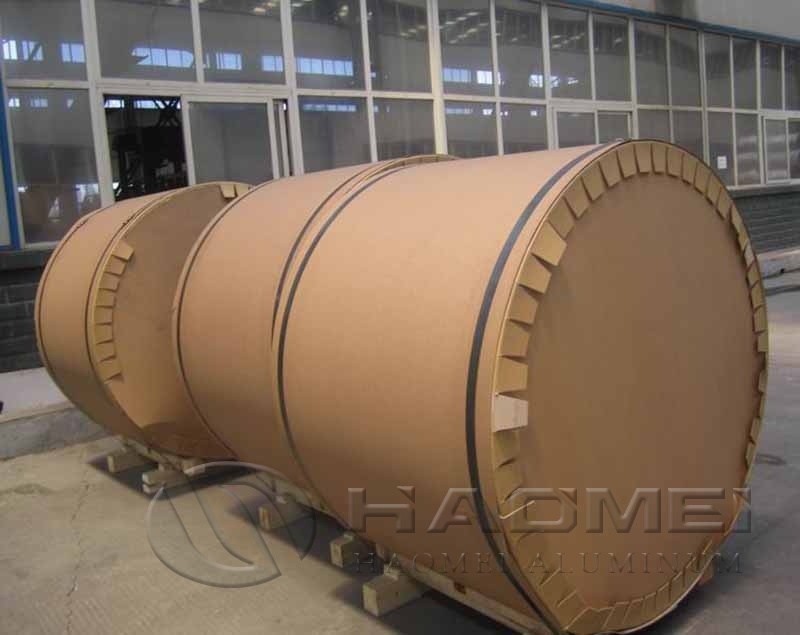
Coil ID, OD, and maximum unit weight.
Surface type: anodized, PE coated, PVDF coated, laminated.
Black color reference: RAL code, approved sample, or Lab* target if controlled.
Coating thickness or anodic film thickness.
One-side or two-side finish.
Adhesion, bend, pencil hardness, impact, and salt spray requirements.
Outdoor or indoor use classification.
Protective interleaf or film requirement.
Edge condition: slit edge, deburred edge, camber limit.
How to choose the right alloy and finish
The black surface does not compensate for a poor substrate choice. Select base alloy by fabrication and service environment first.
| Application need | Recommended substrate | Why |
|---|---|---|
| Tight bending, moderate strength, indoor decorative parts | 1050, 1060, 1100 | High formability, economical |
| General trim, roll forming, painted systems | 3003, 3005, 3105 | Better strength than 1000 series, good workability |
| Corrosion resistance plus forming | 5005, 5052 | Good finish quality and improved corrosion resistance |
| Surface appearance critical for anodizing | 5005 often preferred | Widely used for anodized architectural appearance |
For visible black anodized trim, 5005 is commonly specified because its anodized appearance is more uniform than many other alloys. For painted black strip that must be bent after coating, 3003 or 3005 are common because they balance cost and fabrication.
Performance checks that prevent claims
The most expensive failures usually come from appearance claims after installation or cracking during bending. Ask suppliers for test data on the exact system offered.
| Risk | Test or control | What to check |
|---|---|---|
| Shade variation | Visual panel approval, color measurement | Batch-to-batch tolerance, viewing angle, gloss range |
| Paint peeling | Cross-cut adhesion, T-bend | Adhesion after forming, not only before forming |
| Cracking at folds | T-bend, mandrel bend | Minimum bend radius at supplied temper |
| Outdoor fading | AAMA class, accelerated weathering data | Resin system, expected exposure class |
| Corrosion at cut edges | Salt spray plus field-use review | Coating system and edge protection limits |
| Handling scratches | Pencil hardness, abrasion data, packing method | Whether protective film is needed |
For black coated products, resin choice matters:
Polyester is widely used for indoor and light outdoor use.
SMP offers improved durability in some building applications.
PVDF is the usual premium option for long-term exterior color retention in architectural environments.
Do not compare these systems only by price per ton. Compare by coating thickness, resin type, warranty scope, and test standard.
Pricing factors and quotation comparison
Published primary aluminum prices are commonly linked to LME aluminum, while actual strip quotations also include fabrication conversion, coating cost, slit loss, packaging, and order size. Because coating systems differ greatly, two black strip offers with the same alloy and dimensions may not be comparable.
Use this quotation review table:
| Item | Supplier A | Supplier B | Why it matters |
|---|---|---|---|
| Alloy / temper | Affects forming and corrosion | ||
| Finish type | Anodized and painted are not interchangeable | ||
| Coating or film thickness | Directly affects durability | ||
| Color reference | Prevents shade disputes | ||
| Test report standard | Confirms comparable data | ||
| Protective film / packing | Reduces transit damage | ||
| Width tolerance / camber | Important for automated feeding | ||
| Lead time by lot | Impacts project continuity |
Practical sourcing steps
Define the service environment first: indoor, outdoor, coastal, industrial, food-contact adjacent, or decorative only.
Select substrate alloy based on forming and corrosion requirements.
Choose finish system: anodized for metallic appearance, painted for tighter color control and lower cost.
Lock the black reference sample before mass production.
Request coating thickness and mechanical test values in writing.
Approve a pre-production coil sample if appearance is critical.
Confirm packaging, slit edge quality, and film protection for transport and stamping.
Keep one retained sample from each shipment for claim comparison.
For most industrial orders, the safest approach is to treat the black finish as a functional specification, not just a color request. That means ordering the substrate, finish type, test standard, and acceptance criteria together so that every delivered strip performs the same way in production.
Original source: https://www.aluminumstrip24.com/news/black-aluminium-strips.html
Tags: black aluminium strips, black anodized aluminum strip, black coated aluminum strip,
Previous: Transformer Aluminium Strip Manufacturers
Next: Aluminum Strip for Power Cable