

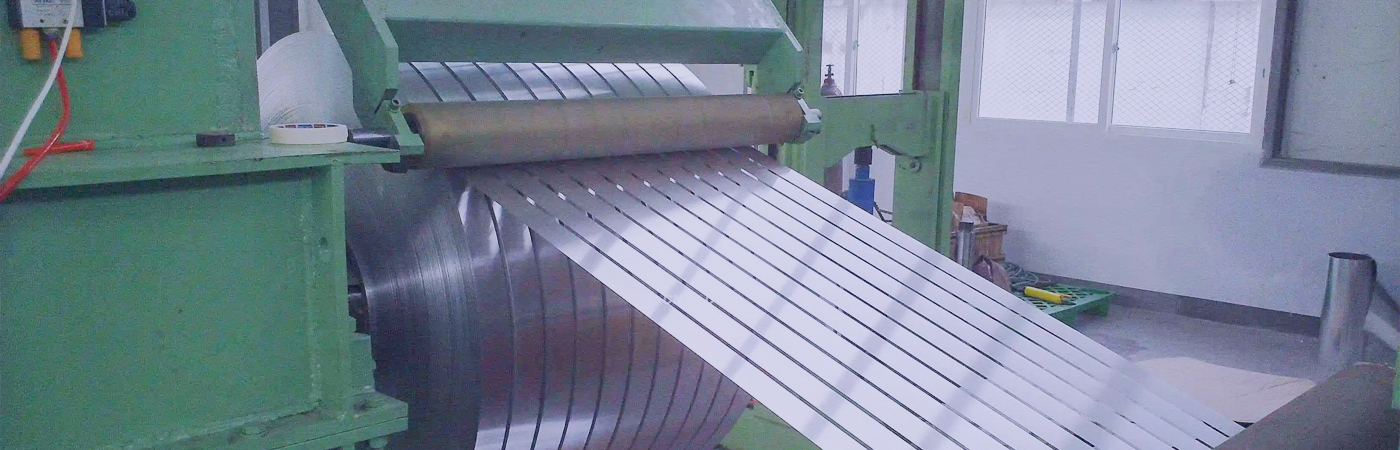
Decorative Aluminium Strips
Decorative aluminium strips are used for ceiling edges, wall panels, furniture trim, appliance frames, sign borders, and architectural profiles. The main risk is not the base metal itself. It is surface failure: color mismatch, coating peel-off, scratches after installation, or corrosion at cut edges.
This article focuses on one critical concern: coating adhesion and surface durability. If the finish fails, even a dimensionally correct product becomes unusable.
1. Define the application before choosing alloy and finish
Start with the service environment, not with appearance only. Indoor dry furniture trim, kitchen cabinet edging, humid ceiling systems, and outdoor facade lines require different specifications.
| Application | Recommended base alloy options | Finish type | Main control point |
|---|---|---|---|
| Furniture and cabinet trim | 1050, 1060, 1100, 3003 | Polyester coating, anodizing, brushing | Scratch resistance and color consistency |
| Ceiling and wall decoration | 3003, 3004, 5005 | PE, PVDF, powder coating | Coating adhesion and flatness |
| Appliance or display edging | 1100, 3003, 5052 | Brushed, mirror, coated | Surface defect control |
| Exterior architectural line | 5005, 5052, 6063 | PVDF or AAMA-rated powder | UV, corrosion, and gloss retention |
Pure aluminium grades such as 1050, 1060, and 1100 provide good formability and bright appearance. Manganese-containing 3003 improves strength while remaining easy to roll form. Magnesium-containing 5005 and 5052 are often selected where corrosion resistance and anodized appearance matter.
For decorative trim requiring a clean anodized surface and moderate strength, 5005 Aluminum Strip is often more suitable than very soft pure aluminium. For formed interior profiles where cost and workability are important, Different Thickness 3003 Aluminum Strip is a practical option.
2. Standards to put into the purchase specification
Do not rely on vague terms such as decorative grade or premium surface. Use recognized standards and define the inspection method.
| Item | Common reference | What it controls |
|---|---|---|
| Chemical composition | EN 573-3, ASTM B209/B209M | Alloy identity and impurity limits |
| Temper designation | EN 515, ASTM B209/B209M | H14, H24, O, T5, and other tempers |
| Dimensional tolerance | EN 485-4, ASTM B209/B209M | Thickness, width, length, flatness tolerance by size range |
| Tensile test | ASTM B557/B557M, EN ISO 6892-1 | Yield strength, tensile strength, elongation |
| Coating adhesion | ISO 2409, ASTM D3359 | Cross-cut or tape adhesion rating |
| Gloss | ASTM D523, ISO 2813 | 20 degree, 60 degree, or 85 degree gloss measurement |
| Color difference | ASTM D2244, ISO/CIE 11664 | Delta E color control under defined illuminant |
| Salt spray | ASTM B117, ISO 9227 | Comparative corrosion screening, not direct lifetime prediction |
| Coating durability | AAMA 2603, 2604, 2605; Qualicoat specifications | Architectural powder or liquid coating performance classes |
When interpreting salt spray results, be precise. ASTM B117 states a controlled salt fog test method; it does not provide a guaranteed outdoor service life. Use it as a comparative screening tool and combine it with coating type, edge sealing, alloy selection, and real exposure conditions.
3. Coating systems: compare before approving samples
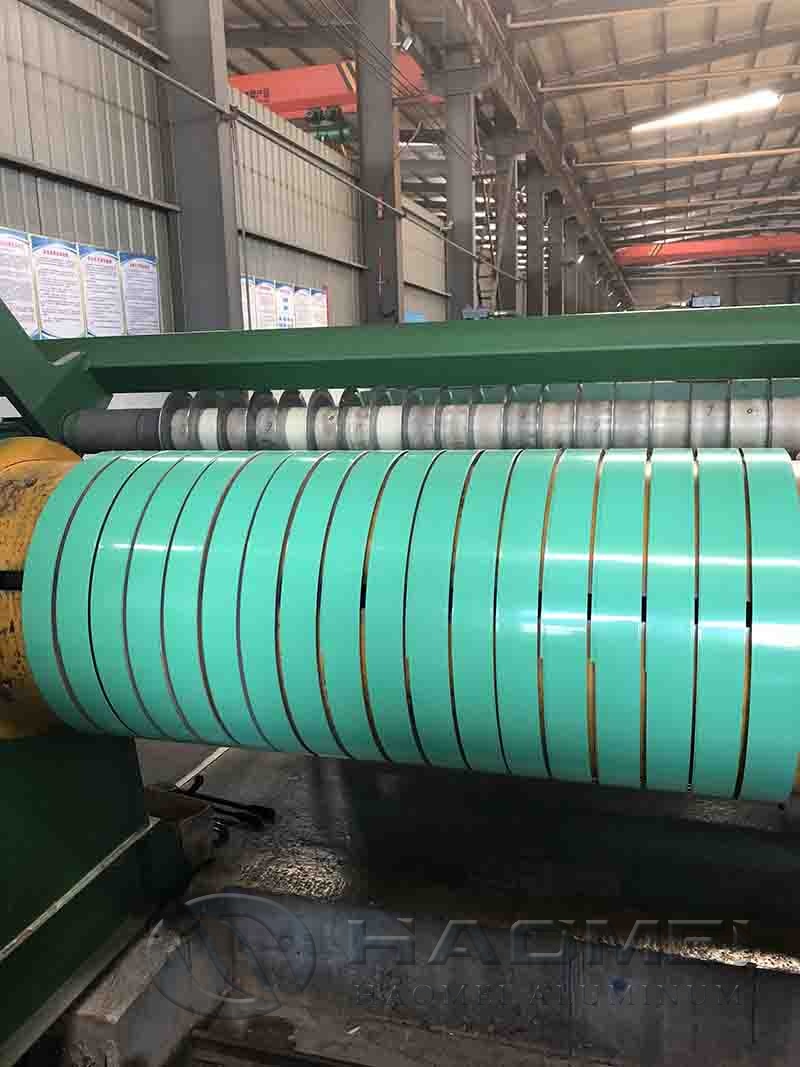
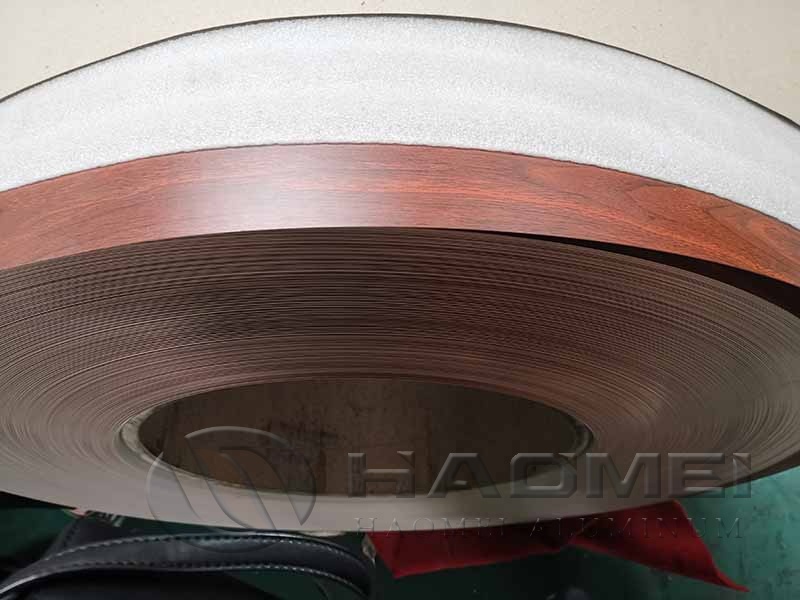
The visible surface can be anodized, roll coated, powder coated, brushed, mirror finished, embossed, or wood grain printed. Each option has a different cost and performance profile.
| Finish | Advantages | Risk to check | Suitable use |
|---|---|---|---|
| Polyester roll coating | Economical, many colors, good indoor appearance | Lower UV resistance than PVDF | Interior trim, ceiling, furniture |
| PVDF coating | Strong weatherability and color retention | Higher cost, minimum order constraints may apply | Exterior decoration |
| Powder coating | Thick film, good edge coverage | Orange peel, gloss variation, curing control | Profiles and exposed trim |
| Anodizing | Metallic look, hard oxide layer | Color variation by alloy and batch | Premium interior, appliance, architecture |
| Brushed finish | Modern texture, hides small handling marks | Directional scratches, fingerprint marks | Furniture, signage, appliance edging |
| Wood grain transfer | Natural appearance on aluminium base | Pattern repeat, heat resistance, adhesion | Doors, panels, cabinets |
For coated aluminium trim, require the supplier to state coating thickness and test method. For architectural coatings, AAMA 2603, 2604, and 2605 separate performance levels by weathering, chalking, gloss retention, and color retention requirements. AAMA 2605 is generally used for higher exterior durability than AAMA 2603.
4. Inspection checklist for incoming decorative aluminium material
Use a written acceptance plan. Visual approval alone is not enough.
| Check point | Method | Acceptance suggestion |
|---|---|---|
| Alloy and temper | Mill test certificate, third-party chemical test if needed | Match the ordered alloy and temper standard |
| Thickness and width | Calibrated micrometer, width gauge | Follow EN 485-4 or ASTM B209/B209M tolerance table stated in contract |
| Surface defects | Inspection under agreed light source and distance | No exposed substrate, blisters, dents, heavy scratches, coating streaks |
| Color consistency | Spectrophotometer using agreed illuminant and observer angle | Define Delta E limit before mass production |
| Gloss | Gloss meter per ASTM D523 or ISO 2813 | Define target gloss and tolerance band |
| Adhesion | ISO 2409 or ASTM D3359 cross-cut/tape test | State required rating, sample position, and retest rule |
| Bend performance | 180 degree bend or T-bend, depending on use | No cracking or coating delamination at formed radius |
| Packing | Moisture barrier, edge protection, pallet condition | No water stain risk during sea or warehouse storage |
For narrow slitted material, edge quality matters. Burrs can scratch the finished face during winding and cause safety issues during handling. Specify maximum burr height, winding direction, inner diameter, outer diameter, and whether paper interleaving or protective film is required.
5. How to compare offers without being misled by unit price
A low unit price can hide thinner coating, wider thickness tolerance, poor packaging, or an unverified finish system. Use a cost breakdown instead of comparing only per-ton prices.
| Cost component | What to request | Why it matters |
|---|---|---|
| Aluminium base price | Pricing formula linked to LME aluminium or another agreed index | Aluminium is a traded commodity, so base metal cost changes over time |
| Regional premium | Stated separately if applicable | Premiums vary by region, delivery term, and market tightness |
| Conversion charge | Rolling, slitting, leveling, annealing | Reflects tolerance, width, and order complexity |
| Surface treatment | Coating, anodizing, brushing, printing | Often the largest quality differentiator |
| Scrap and yield | Slitting loss, edge trimming, minimum usable width | Affects real installed cost |
| Packing | Export pallet, film, desiccant, VCI paper if required | Prevents water stain and transit damage |
| Testing | MTC, coating report, third-party inspection | Reduces dispute risk |
A professional quotation should show alloy, temper, thickness, width, coating type, coating thickness, color code, gloss level, inner diameter, packing method, delivery term under Incoterms, and validity period. If any of these are missing, the offer is incomplete.
6. Practical selection steps
- Confirm the environment: indoor dry, humid indoor, coastal, industrial, or outdoor UV exposure.
- Select alloy by forming and corrosion need: 1050 or 1060 for high formability, 3003 for balanced strength, 5005 or 5052 for improved corrosion resistance and anodized appearance.
- Choose finish by durability: polyester for interior, PVDF or qualified powder coating for exterior, anodizing for metallic appearance.
- Lock standards in the contract: EN 573-3 or ASTM B209/B209M for alloy, EN 485-4 or ASTM B209/B209M for tolerance, ISO 2409 or ASTM D3359 for adhesion.
- Approve a master sample: keep signed color panels for both sides if both are visible.
- Define coil handling: ID, OD, weight range, edge burr, protective film, and winding direction.
- Require inspection records: thickness map, width check, adhesion test, gloss, Delta E, and packing photos.
Decorative aluminium trim performs well when the specification is measurable. The safest purchase file contains three things: a named alloy and temper, a defined coating system with test standards, and a clear acceptance checklist for surface appearance and adhesion.
Original source: https://www.aluminumstrip24.com/news/decorative-aluminium-strips.html
Tags: Decorative Aluminium Strips, Coated Aluminum Strip, Wood Grain Aluminium Strip, Aluminum Trim Strip,
Previous: Coated Aluminum Strip
Next: Why Are The Fins Made Of Aluminum Strip