

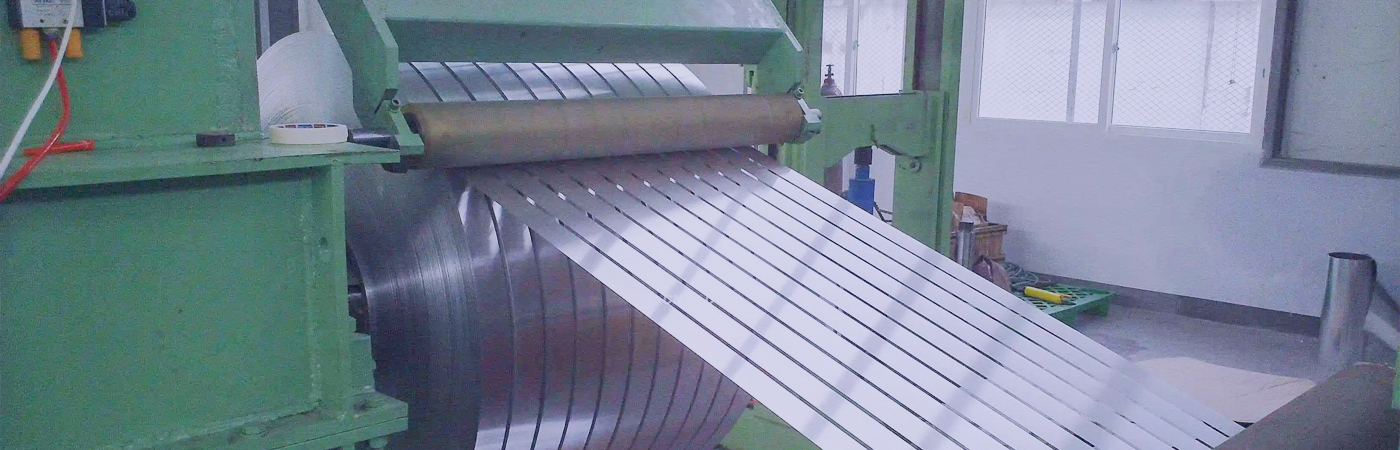
Why Are The Fins Made Of Aluminum Strip
I. Core Material Selection Logic for Fins
Fins absorb heat from the heat source through a substrate, which is then dissipated into the air via convection through fins. Material selection must simultaneously meet four core conditions: high thermal conductivity, thin-wall molding capability, lightweight, high cost-effectiveness, and corrosion resistance. All four conditions are indispensable.
Comparing various metal materials, aluminum strips are currently the only substrate that achieves the optimal balance across these four dimensions. This is the core reason why it has replaced copper and steel as the mainstream material for heatsinks.
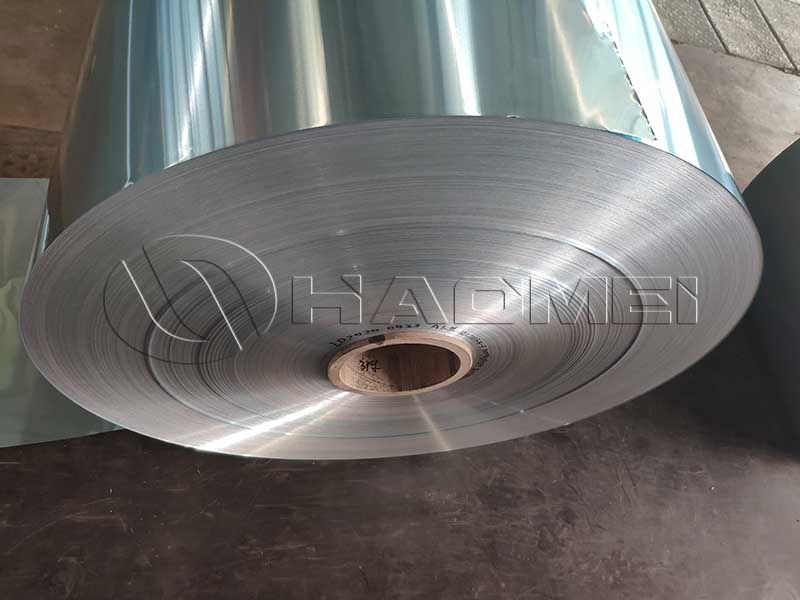
II. Core Reasons for Choosing Aluminum Strips as the First Choice for Fins
1. Thermal Conductivity: Sufficient and Suitable for Mainstream Scenarios
Thermal conductivity: Pure copper 401 W/(m·K), pure aluminum 237 W/(m·K), steel only 45 W/(m·K). Copper has stronger thermal conductivity, but the difference is not irreplaceable. For low-to-medium power scenarios such as LEDs, consumer electronics, and general power supplies, the thermal conductivity of aluminum strips fully meets the requirements; steel has less than 1/5 the thermal conductivity of aluminum and is prone to heat accumulation, thus being directly excluded from heat dissipation substrates.
2. Lightweight Advantage: Reduced Equipment Load
Aluminum fin stock has a density of 2.7 g/cm³, only 1/3 that of copper and 1/2.8 that of steel. Aluminum heat sinks of the same volume are more than 60% lighter than copper ones. This advantage is crucial for new energy vehicles, drones, 5G base stations, and portable devices, reducing vehicle weight, increasing equipment range, and reducing installation load—a highlight that copper cannot replace.
3. Formability: Suitable for Thin-Wall Precision Machining
Heat dissipation efficiency depends on the thickness and density of the fins; the thinner and denser the fins, the larger the heat dissipation area. Aluminum strip has excellent plasticity and can be stamped into ultra-thin fins of 0.1–1.0 mm. It can also be used to create complex structures such as waves and serrations, further expanding the heat dissipation area. At the same time, the coil form is suitable for high-speed production lines, with mass production efficiency far exceeding that of copper. Copper is relatively hard and prone to cracking during thin-wall machining, making it unsuitable for mass precision production.
4. Cost and Corrosion Resistance: The Optimal Solution for Industrialization
In terms of cost, aluminum is only one-third the price of copper, and it can be recycled and remelted, resulting in high waste utilization and a significant cost advantage for mass production. Regarding weather resistance, aluminum naturally forms an alumina protective film on its surface, resisting moisture, salt spray, and UV corrosion. Anodizing can improve corrosion resistance tenfold, making it suitable for harsh outdoor and automotive applications. Steel is prone to rust, and copper is expensive and easily oxidized, making aluminum strips less practical overall.
III. Mainstream Alloys for Heatsink-Specific Aluminum Strips
1. 1060 Aluminum Strip (1-Series Industrial Pure Aluminum)
With an aluminum content of 99.6%,1060 aluminum strip is the most widely used heatsink substrate in the market. Core characteristics: Thermal conductivity 230–237 W/(m·K), close to the theoretical limit of pure aluminum; soft texture, ultra-thin fin stamping and tooth forming without cracking, high yield rate; no alloy additives, lowest cost.
Common tempers are H14/H24, balancing hardness and toughness, suitable for low-to-medium power heat dissipation applications such as LED heat sinks, small appliances, and consumer electronics.
2. 3003 Aluminum Strip (3-series aluminum-manganese alloy)
Manganese is added to enhance performance, resulting in 30% higher hardness than 1060. Fins exhibit stronger resistance to deformation and bending; superior salt spray and moisture resistance, making it suitable for enclosed and humid environments. Due to the alloy composition, its thermal conductivity is approximately 190 W/(m·K), slightly lower than 1060. Primarily used in air conditioner evaporators, water-cooled heat sinks for new energy batteries, and heat sinks for outdoor industrial equipment.
3. Other Alloys
6063 Aluminum Strip (aluminum-magnesium-silicon alloy): High hardness, primarily used in extrusion molding, mostly for integrated heat sinks, unsuitable for thin strip stamping;
1050 Aluminum Strip (99.5% purity): Performance close to 1060 alloy, slightly lower thermal conductivity, mostly used in low-end, affordable heat dissipation products.
Original source: https://www.aluminumstrip24.com/news/why-are-the-fins-made-of-aluminum-strip.html
Previous: Decorative Aluminium Strips
Next: Bendable Aluminum Strips