

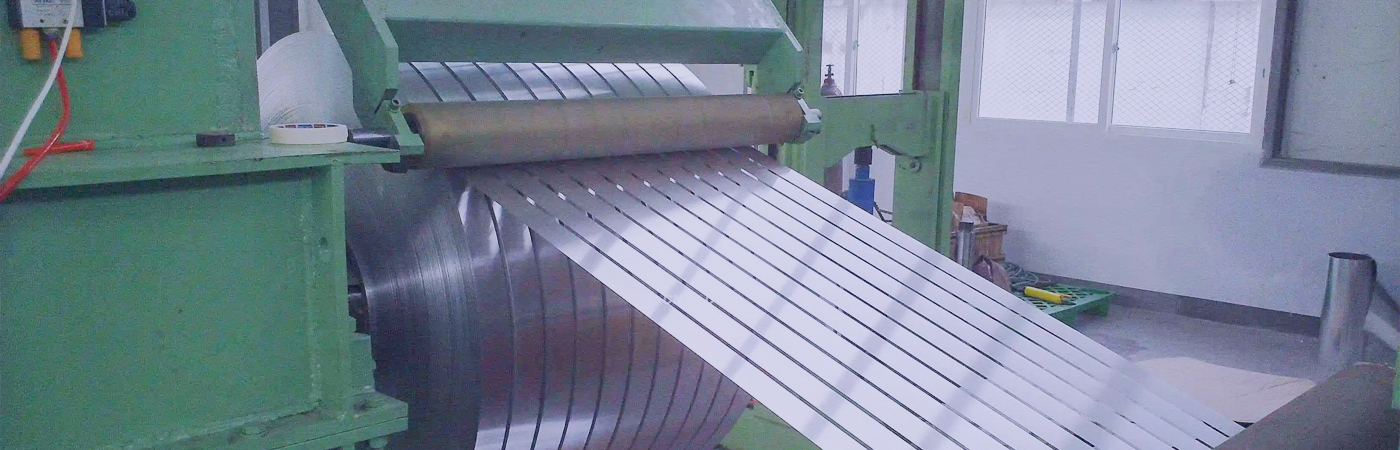
Aluminium Strip For Transformer Winding
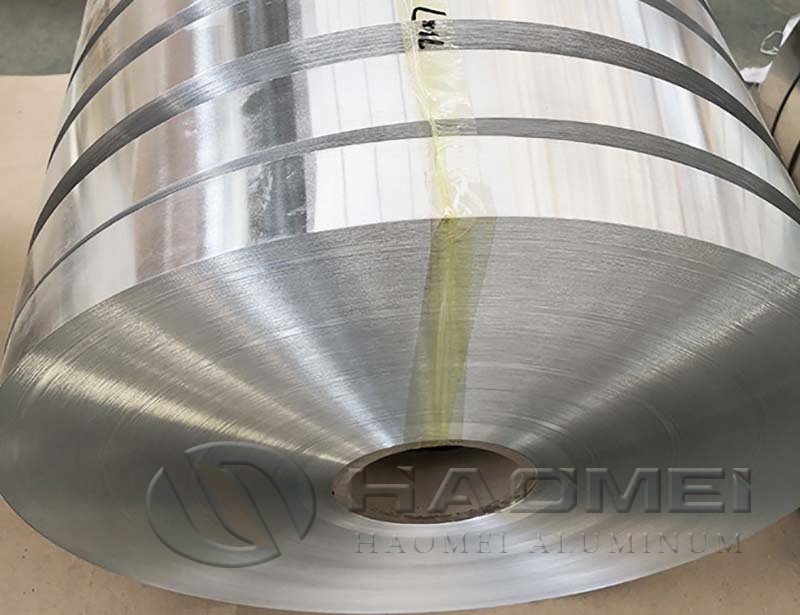
People searching for Aluminium Strip For Transformer Winding usually have one immediate goal: choose a winding material that is electrically efficient, easy to process, and stable in service. Across Google and Q&A communities, the same themes keep showing up, such as grade choice, conductivity, insulation compatibility, sizing, and how to avoid hidden quality risks.
Below are 5 questions that have been trending recently on English Q&A platforms, with practical, purchase-ready answers written from a specification and application perspective.
1) Which aluminium grade is best for transformer winding, 1050, 1060, 1070, or 1100?
Most transformer windings that use aluminium favor high-purity alloys because resistivity and consistency matter more than high strength. In practice:
1050 and 1060 are common for general distribution transformers because they balance conductivity, cost, and availability.
1070 is often chosen when you want a bit more conductivity margin, especially for efficiency-sensitive designs or when trying to reduce winding cross-section.
1100 is widely used too, but selection depends on local standards, stock programs, and how the supplier controls impurities.
Instead of picking only by alloy name, ask for electrical conductivity (IACS) and verify it on the mill test certificate. Also confirm temper and processing needs. For example, if you need stable forming without edge cracking, you may prefer softer tempers.
If you are comparing high-purity product options, you can review 1050 Aluminium Metal Strip and 1070 Aluminum Flat Strip as typical starting points for winding applications.
2) Does aluminium winding run hotter than copper, and how do I offset the conductivity difference?
Yes, aluminium has higher electrical resistivity than copper, so for the same geometry it typically produces more I2R loss, which contributes to temperature rise. The common engineering response is simple: increase the aluminium conductor cross-sectional area to achieve comparable resistance.
For buyers evaluating material quickly, these rules of thumb are frequently referenced:
Copper conductivity is around 100 percent IACS.
High-purity aluminium is typically around 61 to 63 percent IACS.
That does not automatically mean your transformer will run hotter. Loss, cooling, winding layout, insulation, and core design also matter. But if you keep the same window space and try a one-to-one swap, aluminium can be disadvantaged.
A practical procurement step is to request:
Conductivity value and test method.
Dimensional tolerance data, because small thickness or width deviations can change cross-section and resistance.
Surface quality requirements, because rough surface can reduce effective contact quality at joints.
3) What temper should I specify for aluminium strip used in transformer windings?
Temper selection impacts bending, edge performance, and how the conductor behaves during winding and clamping.
For many winding processes, softer conditions are preferred because they:
Reduce edge cracking during tight radii bending.
Reduce the risk of burr-related insulation damage.
Improve fit in layered windings.
However, excessively soft material can be more prone to handling marks, telescoping in coils, and dimensional instability if process control is weak. When asking for quotes, specify not only alloy and temper, but also the winding method and minimum bend radius.
A helpful way to frame your inquiry is: define the winding approach, then set temper around manufacturability and stability rather than focusing only on hardness.
4) What thickness, width, and edge type are most requested for transformer winding aluminium strip?
Transformer designs vary widely, so there is no single best size. But Q&A discussions often come back to the same buying pain point: the drawing states thickness and width, yet the delivered product causes insulation cuts or uneven winding.
Key sizing and edge considerations to request:
Thickness tolerance: tighter control supports consistent resistance and stable stacking.
Width tolerance: affects layer alignment and cooling duct geometry.
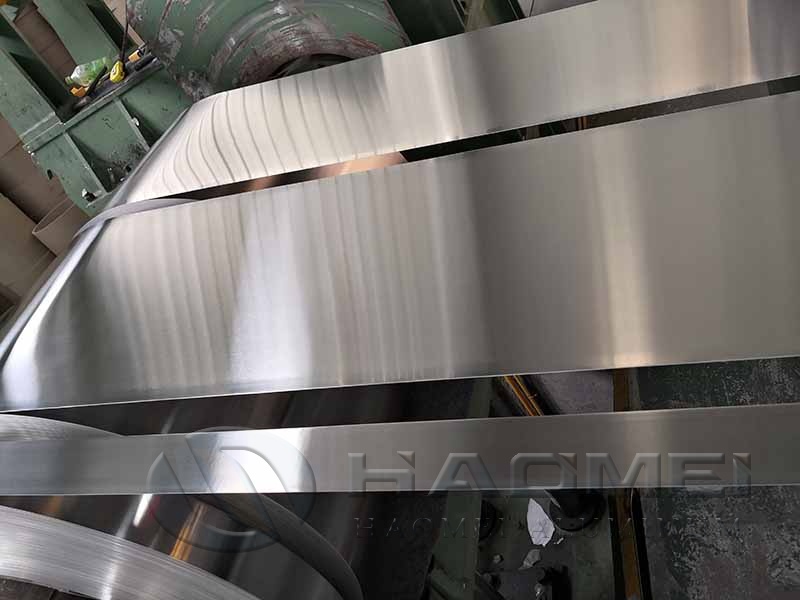
Edge condition: specify slitting quality and edge rounding expectations.
Burr control: burrs are a common cause of insulation failure.
Quick checklist table: what to specify on your purchase order
| Item to Specify | Why It Matters in Winding | What to Ask the Supplier to Provide |
|---|---|---|
| Alloy and conductivity | Loss and heat rise depend on resistivity | Mill test certificate with IACS or resistivity |
| Temper and mechanical range | Affects bendability and clamping behavior | Typical tensile, elongation, and hardness range |
| Thickness and width tolerances | Controls cross-section and winding stability | Tolerance standard and inspection method |
| Edge quality and burr limit | Prevents insulation cuts and partial discharge | Slitting process, deburring, edge rounding option |
| Surface condition | Impacts insulation adhesion and contact resistance | Surface roughness guidance and cleanliness control |
5) How do I judge quality when sourcing aluminium strip for transformer winding from overseas suppliers?
This has become one of the most common questions lately because many buyers can get an attractive price, but worry about performance risk. The best approach is to treat the conductor as an engineered component, not a commodity.
Focus on these verification steps:
Confirm full traceability: heat number, coil number, and matching paperwork.
Request test results: conductivity, thickness mapping, and tensile results.
Inspect edge and surface: ask for close-up photos or sample strips showing slit edge quality.
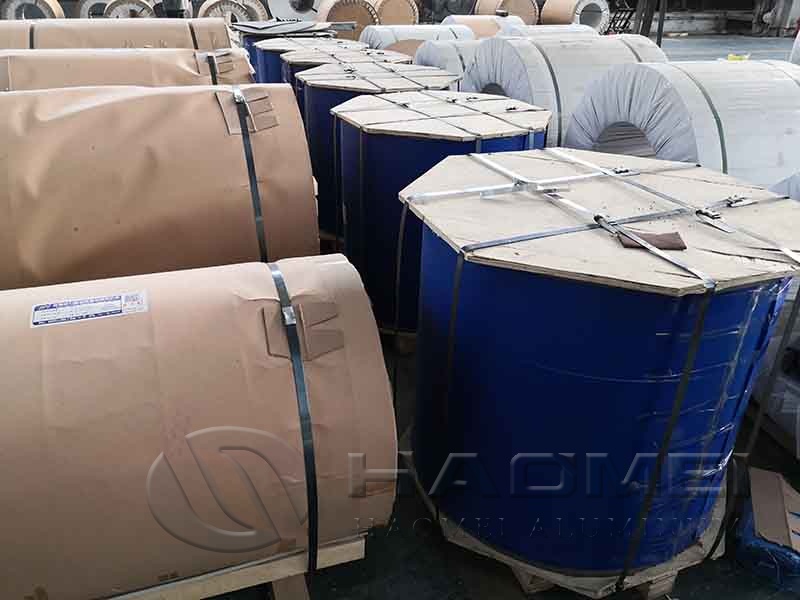
Packaging and handling: winding material is easily damaged by poor packing, moisture, or coil collapse.
Trial and feedback loop: run a pilot coil, then adjust tolerance or temper based on winding performance.
A good supplier will discuss your winding process, insulation type, and joint method, rather than only quoting alloy and size.
Common risk signals table
| Risk Signal | What It Can Lead To | What to Do |
|---|---|---|
| Conductivity not listed on certificate | Unexpected losses and temperature rise | Require IACS value per batch |
| Visible burrs or sharp edges | Insulation cuts, partial discharge | Set burr limits and edge requirements |
| Inconsistent thickness across coil | Uneven resistance, winding instability | Request thickness profile checks |
| Poor coil packing or no moisture barrier | Oxidation, dents, handling defects | Require export-grade packaging spec |
Extra Q&A that shows up often: Is aluminium strip compatible with enamel, paper, and film insulation?
Usually yes, but compatibility depends on surface cleanliness and how the insulation is applied. For paper and film systems, edge condition is critical. For enamel or coated systems, surface prep and adhesion requirements should be clarified early. If you are seeing delamination or pinholes, the issue is often surface contamination, roughness, or a process mismatch rather than the aluminium itself.
When discussing insulation, share your insulation type and target operating temperature class with the supplier so they can recommend suitable surface and edge controls.
Original source: https://www.aluminumstrip24.com/news/aluminium-strip-for-transformer-winding.html
Tags: Aluminium Strip For Transformer Winding, aluminum winding strip, transformer winding material,
Previous: Aluminium Strip 1mm
Next: Aluminium Strip 10mm