

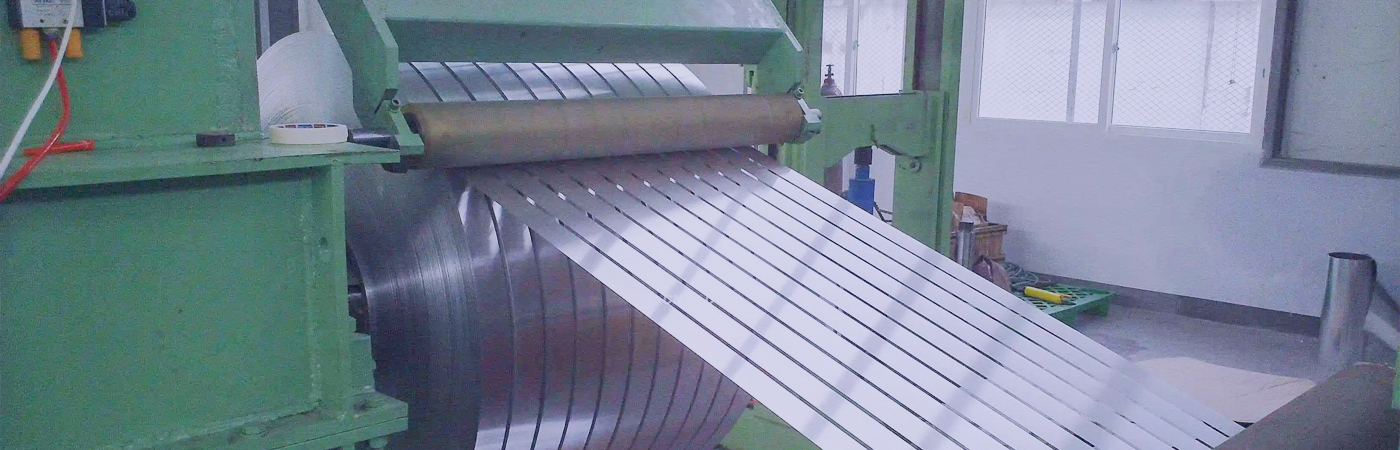
Aluminum Strip For Transformer Winding
People searching for Aluminum Strip For Transformer Winding often arrive with the same practical concerns: electrical losses, bending and winding behavior, insulation compatibility, and how to avoid receiving material that is hard to wind or inconsistent in thickness. Below are 5 hot, real-world questions that have been circulating on Quora, Google, and engineering forums recently, answered in a supplier-friendly but engineering-grounded way.
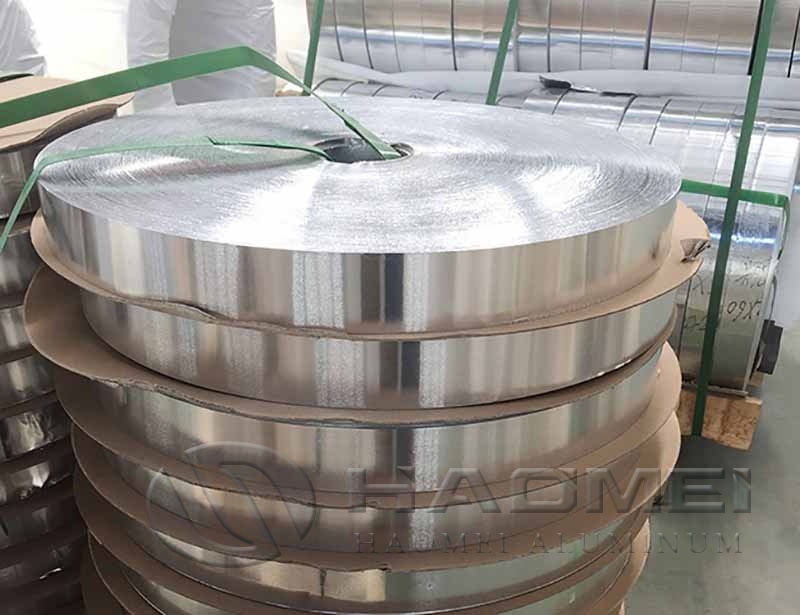
1. Which alloy is best for aluminum strip used in transformer windings, 1050, 1060, 1070, or 1100?
For most transformer winding conductors, the decision is mainly about conductivity versus mechanical handling.
1050 and 1060 are widely chosen when you want good conductivity with reliable availability and workable bending during winding.
1070 is typically selected when conductivity is prioritized further and the design is sensitive to I2R loss.
1100 is also used in electrical applications, but selection often depends on the mill's ability to meet tight thickness tolerance and consistent temper for winding.
Instead of asking only "which alloy is best," ask your vendor to state:
Typical conductivity range for the alloy and temper being offered.
Thickness and width tolerances they can consistently hold.
Edge condition and surface requirements for insulation adhesion.
If your project is cost-sensitive and you are in a common size range, 1050 Aluminium Metal Strip is often a practical starting point. If you are trying to reduce loss or match a design originally built around higher conductivity aluminum, 1070 Aluminum Flat Strip is often considered.
2. What temper should I request for transformer winding, and why do some strips crack during winding?
The "temper" question has been trending because many winding issues get blamed on alloy when the root cause is temper and process control.
In transformer winding, you generally want a temper that balances:
Formability to avoid edge cracking during tight-radius bending.
Dimensional stability so the coil packs tightly and stays uniform.
Surface consistency so insulation films or paper wrap bond evenly.
Cracking during winding is commonly caused by one or more of these factors:
Too hard a temper for the bend radius required.
Edge quality problems, such as micro-burrs, edge waves, or aggressive slitting marks.
Non-uniform annealing, where coil-to-coil mechanical properties vary.
Improper winding setup, including tension that is too high or misaligned guides.
A helpful way to specify what you need is to share your minimum bend radius and winding method, then ask the supplier to recommend temper based on that, and confirm they can provide stable properties across the full coil length.
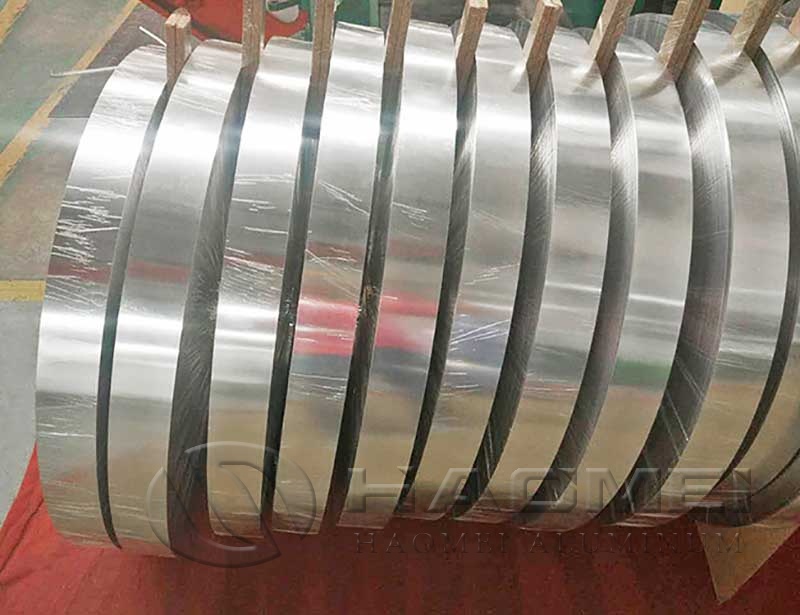
3. How do I choose thickness and width for aluminum strip in transformer winding without increasing losses or overheating?
This is one of the most searched questions because people want a simple sizing rule, but transformer conductor sizing is always a trade between electrical, thermal, and mechanical constraints.
At a practical level, choose thickness and width by checking four items:
Current density and allowable temperature rise: A larger cross-sectional area reduces resistive losses, but may increase winding build and affect cooling.
Skin and proximity effects (especially for higher frequency designs): Conductor geometry influences AC losses.
Window fill and insulation build: Wider or thicker conductors may reduce turns count flexibility.
Winding machine capability: Very wide or very thin material can be harder to keep flat, aligned, and free of wrinkles.
Quick selection checklist (engineering-friendly)
| Design factor | If you see this issue | Adjust conductor choice |
|---|---|---|
| Excess heating | Hot spots near inner turns | Increase cross-section or improve cooling path |
| High AC loss | Audible noise, higher no-load loss at frequency | Consider geometry changes, reduce thickness for AC, or use multiple parallel conductors |
| Poor fill factor | Can't fit turns into window | Reduce insulation build, adjust width, or revise layer arrangement |
| Winding defects | Wrinkles, camber, edge damage | Tighten tolerances, improve edge condition, consider a more formable temper |
Rather than only specifying "X mm thick, Y mm wide," include: required tolerance, flatness target, camber limit, and edge type. Those are often the difference between a smooth winding job and unexpected scrap.
4. What quality checks should I ask for to avoid thickness variation, burrs, and poor insulation adhesion?
This question is hot because many users received material that looks fine visually but performs poorly during winding or after impregnation.
Ask for a quality package that matches winding reality, not just generic certificates:
Incoming inspection items that matter for winding
| What to check | Why it matters in winding | Typical method |
|---|---|---|
| Thickness tolerance and profile | Uneven layers cause gaps and coil instability | Multi-point micrometer mapping across width |
| Width tolerance | Impacts turn count per layer and insulation fit | Caliper checks along coil length |
| Edge burr and edge rounding | Burrs cut insulation and trigger partial discharge risk | Edge gauge, tactile check, microscope sampling |
| Flatness and camber | Camber leads to telescoping and wandering coils | Straightedge, camber measurement over length |
| Surface cleanliness | Oils can reduce paper or film adhesion | Dyne testing, solvent wipe checks |
| Conductivity | Ensures predictable loss and heating | Eddy-current conductivity test |
If you use paper wrap, enamel, or film lamination, explicitly state the insulation process so the supplier can control surface cleanliness and roughness accordingly.
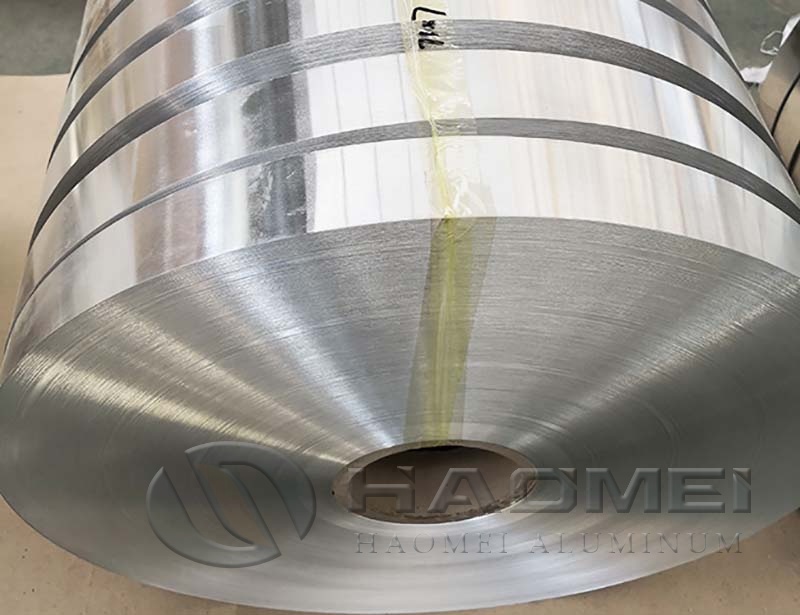
5. Aluminum vs copper for transformer windings: will aluminum strip increase failure risk?
This question appears frequently because people equate "aluminum" with "lower performance," while many modern transformers run reliably with aluminum conductors when designed correctly.
What changes when using aluminum:
Aluminum has lower electrical conductivity than copper, so designs typically compensate with greater cross-sectional area.
Aluminum is lighter, which can help handling and sometimes mechanical design.
Terminations and joints need proper design to control contact resistance and avoid galvanic or loosening issues.
Does it increase failure risk?Not inherently. Most failures attributed to aluminum come from avoidable issues:
Undersized conductor cross-section leading to higher operating temperature.
Poor joint design or improper torque practices.
Insulation damage caused by burrs or sharp edges.
If your design is being converted from copper to aluminum, ensure the electrical and thermal calculations are updated, and confirm the strip you purchase is consistent in edge condition, temper, and thickness. That combination, more than the material choice alone, is what drives winding reliability.
Practical questions to ask your supplier before ordering
What conductivity range do you guarantee for this alloy and temper?
What are your thickness and width tolerances, and how do you measure them across the coil?
How do you control burr height after slitting?
Can you provide flatness and camber targets suitable for automated winding?
What packaging prevents edge damage and oxidation during shipping and storage?
Original source: https://www.aluminumstrip24.com/news/aluminum-strip-for-transformer-winding-2026-03-02.html
Tags: Aluminum Strip For Transformer Winding, transformer winding aluminum strip,
Previous: Aluminium Strip Ceiling
Next: Aluminium Flat Strip